Imagine buying a pair of running shoes. The advert was relevant, the website helped you find your size, and checkout took thirty seconds. Lovely.
The following morning, the same brand emails you: “Still thinking about those shoes? Here is 10% off.”
You are now thinking about them. Mainly about the 10% you did not get.
I’ve spent much of my career working on this problem: individual channels work, but the customer experience falls apart between them.
I spent four years at Bloomreach working on marketing automation, first as a consultant working directly with brands including Vans and Pandora, and later as a product manager helping shape the products. Running my own Shopify store and offering ecommerce consulting through ShopPilot has also given me the smaller-business version of those problems, where the person responsible for fixing everything is often you.
If you are reading this, you are probably looking for ways to improve your marketing. A useful place to start is what your customers need to make their next decision. From there, we can work out what information you need, which tools can help, and where AI actually saves work.
We will use concrete examples throughout. You should leave with a few improvements you can try in the software you already pay for.
1. Your customer does not see your departments
There are good reasons marketing work gets divided by channel. Managing advertising requires different skills from building a website or running email campaigns. As businesses grow, those jobs often end up with different specialists, agencies or departments.
Each team then has its own targets. Advertising wants more customers at an acceptable cost. The website team wants more visitors to buy. The email team wants campaigns to generate sales.
The difficulty appears where those responsibilities meet. An advertising team can promise something the landing page does not explain. An email team can send a discount without knowing the customer just paid full price. A support team can be handling a complaint while marketing asks for another order.
For the customer, these are all interactions with the same company. They have little reason to care which department sent the message.
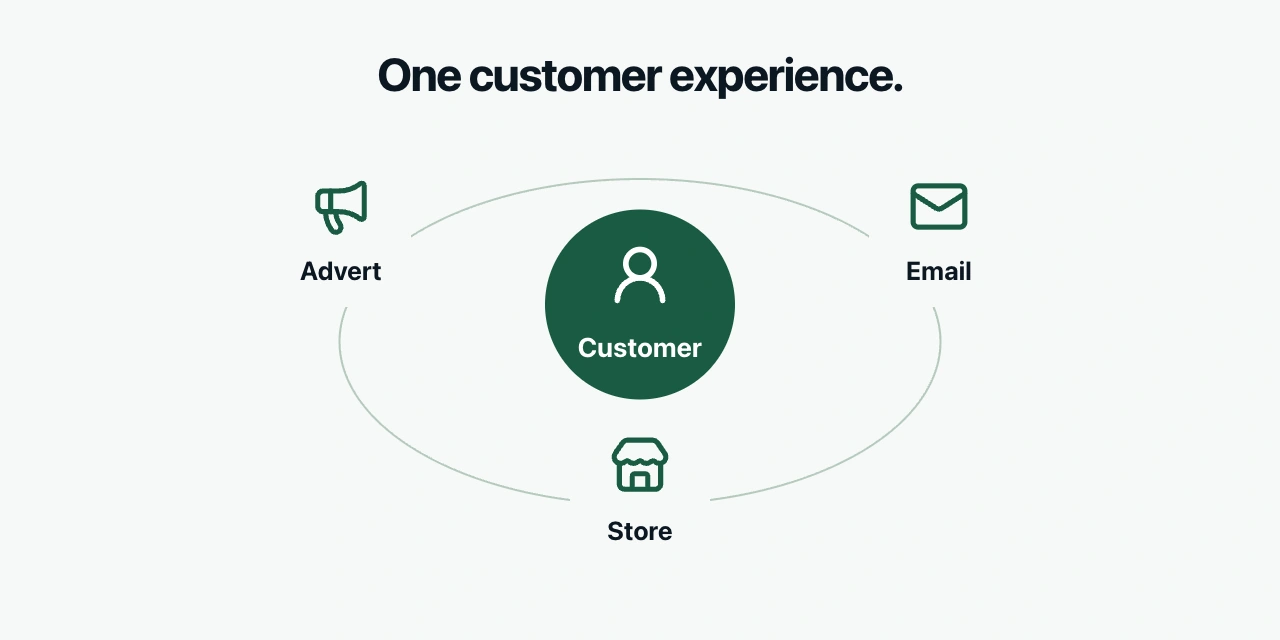
That is why improving marketing involves coordinating decisions across channels. The important question becomes: given what has happened to this customer, what would be useful next?
In our shoe example, the next useful message might explain how to check the fit or exchange the size. Another checkout reminder makes no sense because the customer has already completed that step.
Something to check today: In a Klaviyo abandoned-checkout flow, a filter such as “Placed Order zero times since starting this flow” can stop subsequent reminders after a purchase. If buyers still receive them, check whether purchase events arrive correctly and whether the filter is configured. Better copy cannot repair a missing purchase event.
2. Personalization starts with understanding the decision
Suppose two people arrive on your running-shoe page.
One is training for their first 5 km and has no idea what to choose. The other knows the exact model they want and needs a replacement pair.
Giving both people the same experience can create unnecessary work. The beginner needs guidance. The returning buyer needs a quick way to find the right model and size.
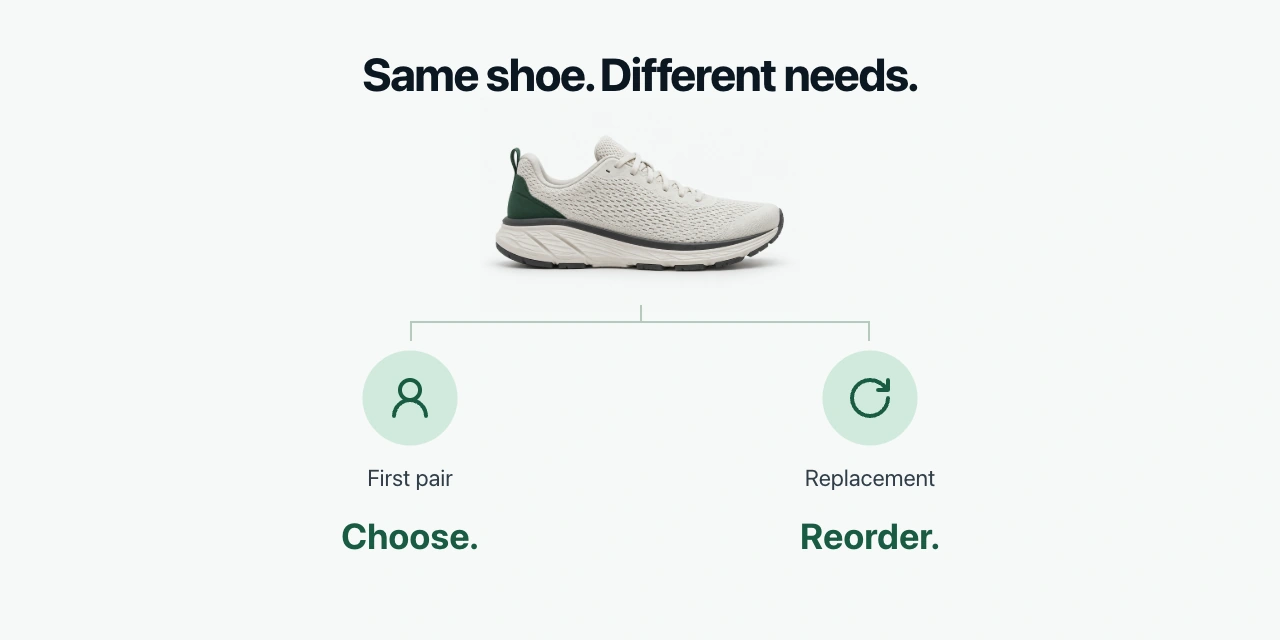
Personalization means adapting the experience to relevant information about the customer or their situation. Its purpose is to help them choose, remove avoidable friction and make your communication useful.
You do not need to know someone's identity to make an experience more relevant. A visitor arriving from an advert about trail running has already given you useful context. A landing page explaining grip, terrain and available trail models follows naturally from that interest.
Product education is another practical starting point. REI's running-shoe guide explains how to choose based on use, features and fit. It is a concrete example of a retailer helping someone understand the purchase. I am not claiming a particular sales uplift; the useful idea is to answer the question preventing the decision.
Ask your support team which questions customers repeatedly ask before buying. Answer one of those questions on the relevant product page. If people keep asking whether a jacket is waterproof, another lifestyle photograph probably will not settle it.
Recommendations also serve different purposes. In Shopify Search & Discovery, related products can offer alternatives, while complementary products offer useful additions. Comparable shoes help someone choose a pair. Suitable socks help someone complete that purchase. Check that your theme displays the appropriate recommendation blocks.
Before adding recommendations, decide which of those jobs you are trying to do. “Show more products” is a setting. “Help the customer choose” is a reason.
3. Customer data is how you remember what happened
A salesperson in a physical shop can ask questions, notice what someone is considering and remember a previous conversation. Online, your systems need records to provide some of that context.
Those records are customer data. They include purchases, searches, returns, support conversations and preferences people share with you.
The value comes from how the information changes your decision:
| What you know | What it helps you decide |
|---|---|
| Someone bought the shoes | Stop asking them to complete checkout. |
| They requested their size when it returns to stock | Notify them when that specific item is available. |
| They returned the purchase | Investigate the reason before treating it as a successful sale. |
| They asked about sizing | Make sizing guidance easier to find. |
Notice that a record and an explanation are different things. Browsing an expensive product does not prove someone can afford it. Buying a gift does not make the recipient's preferences the buyer's preferences. An AI system can make those assumptions just as confidently as a person.
When the reason matters, asking can be more useful than guessing. For example, a simple choice between “shopping for myself” and “buying a gift” may change which guidance you offer.
A particularly useful example is a back-in-stock flow in Klaviyo. The customer tells you exactly which unavailable item they want, and the flow can wait until inventory returns before notifying them. You have a clear need, a relevant moment and a specific action. There is considerably less guessing involved than in your next “We miss you” campaign.
Collect the information needed for that job, respect the communication permissions you have, and check that the records reach the system taking the action. You do not need an ambitious project to collect everything before you can fix one useful experience.
4. Growing means winning customers and helping them return
Acquiring a customer costs money. If the first purchase barely covers advertising and fulfilment, the business may depend on later purchases to make the relationship worthwhile.
That is why marketing teams care about retention, meaning customers continuing to buy, and customer lifetime value, or CLTV, meaning the value generated over the relationship. Be clear whether your company measures that value as revenue or contribution after costs. They answer different questions.
For example, suppose an order produces $25 after product costs, discounts, delivery subsidies and expected returns, before marketing costs. If acquiring the customer costs $30, you have $5 left to recover before covering overheads. Repeat purchases could improve the economics, but that is a possibility you need evidence for.
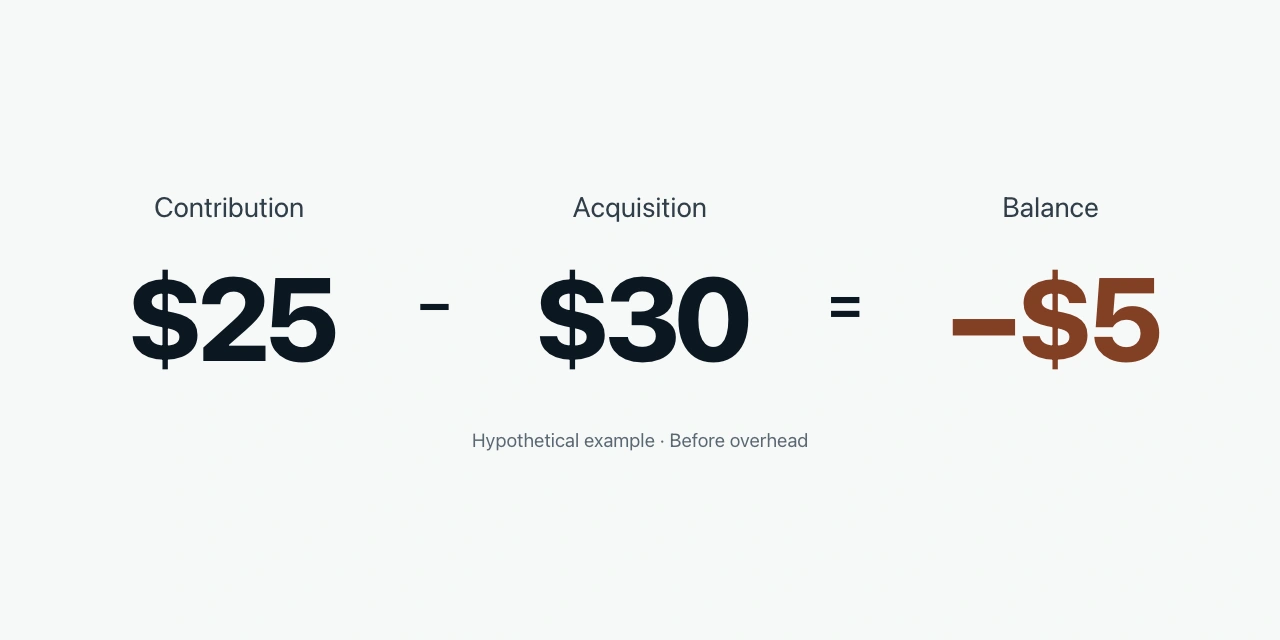
This helps explain why customer growth involves several jobs:
- Help interested visitors make a first purchase.
- Help first-time buyers have a good experience and find a relevant reason to return.
- Keep useful relationships with repeat customers.
- Understand why customers stop buying and whether there is a reason to re-engage them.
Grouping people so you can treat these situations differently is segmentation. Start with a difference that changes the action. “Never purchased” and “purchased yesterday” clearly need different messages.
Timing depends on the product. A coffee customer may need replenishment after a few weeks. A sofa customer probably does not. Before creating a reminder, look at how long customers actually take between purchases and whether the item is something they consume or replace.
For a first-time buyer, the best follow-up may be help using the product. If they cannot get the coffee machine working, a campaign selling more coffee is arriving several steps too early.
5. Find an opportunity before building another dashboard
Once you have useful records, the next job is to understand where people struggle and choose a change worth making.
Start with a specific question: “Why do people searching for this product fail to buy?” or “Are fewer first-time buyers returning?”
For the first question, Shopify Search & Discovery reports include searches with no results and searches with results but no clicks. These are different clues.
A search with no results may reveal a missing product, unfamiliar wording or a search configuration problem. Results with no clicks may suggest the products shown do not match what the customer wanted. Inspect the query and results before deciding which explanation applies.
This is useful because customers have already told you what they are looking for. Fixing a common failed search may help people already visiting your store get further.
For repeat purchases, use a cohort: a group of customers who first bought during the same period. Shopify's customer cohort reports let you examine what happens after that first order.
Compare groups at the same age. Customers acquired in January have had more time to return than customers acquired in July. Comparing their total repeat-purchase rates in August would confuse time with performance.
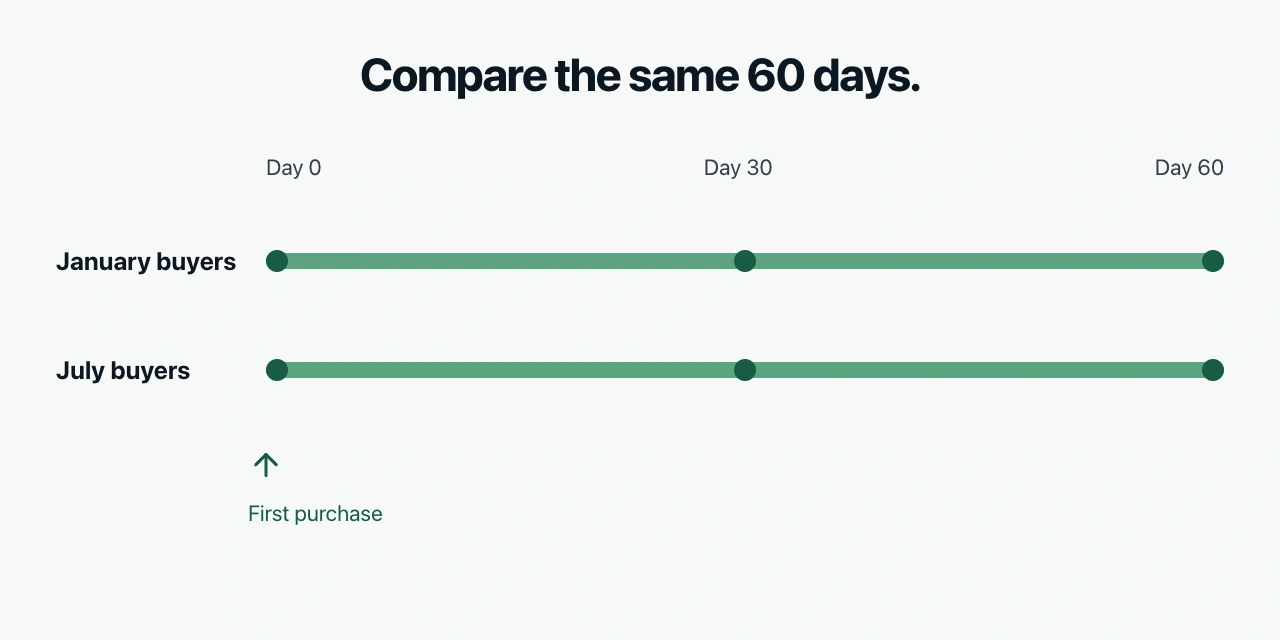
If second purchases really declined, investigate product mix, returns and acquisition channels before preparing an offer. You may have acquired more people buying a one-off gift. You may have a delivery problem. Those explanations need different responses.
Then give the work an owner and a review date. A useful analysis should lead to a decision, including the decision to investigate further. Otherwise it becomes another dashboard that looks impressive during the meeting and quietly retires afterwards.
6. Choose tools around the work they need to do
The examples so far require three capabilities: recording what happens, understanding it and delivering an action.
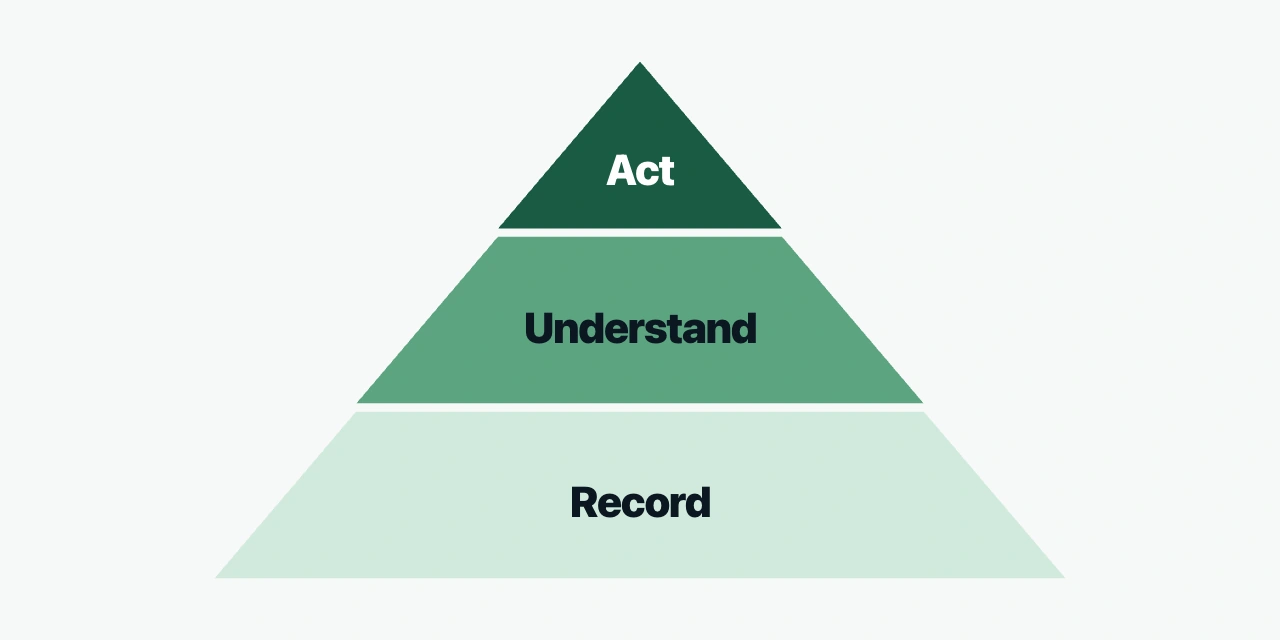
Your technology stack is the collection of systems providing those capabilities. Shopify records orders and manages the storefront. An email platform such as Klaviyo can use customer events to send messages. Analytics tools help you examine behavior and results.
Some businesses also use a data warehouse, a central database combining information from several systems. That can help connect orders, advertising costs and support records for analysis. It also introduces integration and maintenance work, so it needs a reason.
The important connection is often surprisingly ordinary. If your email platform needs to stop a checkout reminder, it must receive the purchase event before the next message goes out. A monthly reporting update would be too late for that job.
Before buying software, write down one workflow it must complete. For example: “Find first-time buyers who are ready to replenish, prepare the audience, send the appropriate message and measure repeat purchases.”
Ask a vendor to demonstrate that workflow with realistic data. Check how much manual work remains, who maintains the connections and whether your team can repeat it independently.
Also check your existing platform. A feature you already own but never configured can solve the problem just as effectively as a new subscription. Less effectively for the salesperson, admittedly.
7. AI makes preparation faster. Give it a well-defined job.
Much of marketing work involves reading reports, preparing audiences, drafting messages and checking details. AI can help with that preparation, especially when it has access to the relevant information and you understand how to evaluate its output.
For example, Shopify Sidekick provides assistance with store data, content and tasks. The useful question is which part of your actual workflow it can complete and how you will check the result.
Compare “Give me ideas to improve retention” with:
Compare customers who first bought in June with earlier groups over their first 60 days. Check whether the second-purchase rate changed. Show the calculation, explain how refunds are treated, and break down any difference by first product and acquisition channel where the data is available. List what you cannot determine.
The second request defines the population, comparison and evidence needed. It makes the answer easier to verify. Whether a particular assistant can fulfil it depends on its access and capabilities; ask it to identify missing information.
Use the same approach for content. Provide the audience, customer need, product facts, offer rules and examples of your voice. Ask for a few meaningfully different approaches, then review them. Fifty variations of “Discover our latest collection” do not give you fifty useful ideas.
Before anything reaches customers, check the selected audience, claims, discounts, links and timing. Count review and correction time when deciding whether AI helped. The output arriving quickly is only part of the job.
8. Measure whether the change was worth making
Suppose a discount campaign generates orders. Some recipients may have bought anyway, and some may simply have brought their next purchase forward. The campaign's reported revenue does not settle whether the business is better off.
Choose what success means before launching. For a replenishment reminder, that might be more repeat purchases over an appropriate period, with enough contribution left after discounts and campaign costs.
An A/B test randomly divides an audience between two versions. Changing one factor makes the difference easier to interpret. But choosing between two emails answers a different question from whether sending either email helps. For that, a randomly selected group receiving no campaign can provide a useful comparison.
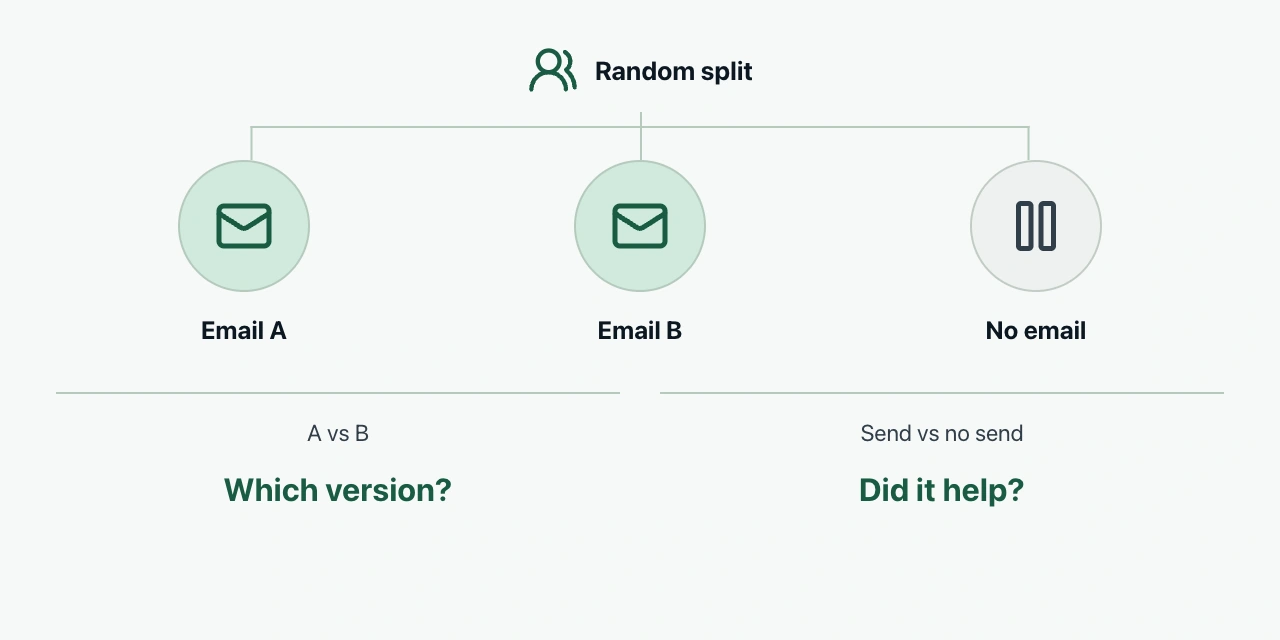
Where feasible, agree the measurement period and sample requirements in advance. Small or inconclusive results should stay inconclusive.
Use supporting metrics carefully. Email opens can be inflated by privacy-related preloading. An open is therefore weaker evidence of interest than it may appear.
Keep a short record of the change, expected outcome, result and next decision. Over time, this gives your team something valuable: a memory of what it has learned, rather than another reason to repeat last year's campaign.
Start with one customer problem
You can make progress without reorganizing the department first.
Look for an experience that currently makes little sense: buyers receiving checkout reminders, customers unable to find a product, an unanswered sizing question, or a replenishment message arriving at the wrong time.
Work out what the customer needs, which information changes the decision and which existing tool can deliver it. Give someone ownership, check the result and keep what you learn.
For a deeper dive into technical marketing, check out Datacop Academy.